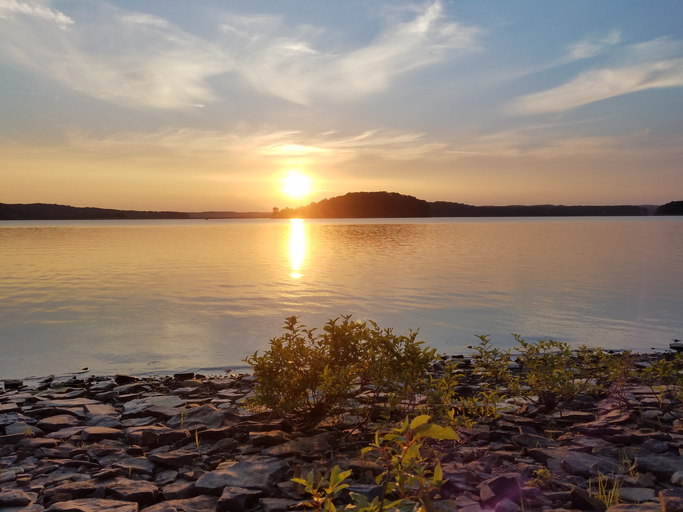
Whether you want to drop anchor in the middle of Indiana's largest natural lake, or fish for walleye at sunrise on a southern reservoir, Indiana's lakes deliver.
Indiana boasts over 1,000 lakes and reservoirs spanning 160,000 acres for diverse water recreation.
Glacial lakes in the north contrast with massive man-made reservoirs built for flood control in the south.
Top lakes like Monroe, Patoka, and Wawasee offer world-class fishing, boating, camping, and natural beauty.
Source: Tom Cuneo / Getty
Top 15 Public Lakes In Indiana – Boating, Fishing, And Size Details
Indiana may not be the first state that comes to mind when you think of lakes, but the Hoosier State is hiding one of the Midwest’s most impressive collections of water.
With over 1,000 lakes and reservoirs covering more than 160,000 acres, Indiana offers something for every type of water enthusiast. From seasoned anglers and powerboaters to kayakers, swimmers, and families just looking for a perfect summer afternoon. The state’s northern counties tell the story of the last Ice Age, where retreating glaciers carved out crystal-clear kettle lakes that still dazzle visitors today.
Head south and central, and you’ll find massive man-made reservoirs built by the U.S. Army Corps of Engineers which are now engineering marvels that now serve as beloved recreational destinations.
Whether you want to drop anchor in the middle of Indiana’s largest natural lake, fish for walleye at sunrise on a southern reservoir, or explore a chain of connected waterways by canoe, Indiana’s lakes deliver.
Take a look below at the Top 15 Public Lakes In Indiana.
Indiana’s largest inland body of water, Lake Monroe spans an impressive 10,750 acres and was completed in 1965 by the U.S. Army Corps of Engineers for flood control on Salt Creek. It reaches a maximum depth of 54 feet with an average depth of 17.3 feet. Nine boat launches make it one of the most boater-friendly lakes in the state, and fishing for walleye, catfish, and crappie is excellent year-round. Over 200 campsites sit along its wooded shoreline, and the lake provides drinking water to over one million residents in the Bloomington area. Fossil hunters will love the crinoid-rich limestone ledges exposed along the banks.
2. Patoka Lake — Crawford/Dubois/Orange Counties
Boating: Yes — full recreational boating and marina access.
The second-largest reservoir in Indiana at 8,880 acres, Patoka Lake is a crown jewel of southern Indiana tucked inside the Hoosier National Forest. Completed in 1978 with a 145-foot rockfill dam, it reaches a maximum depth of 52 feet. Deep coves and standing timber make it one of the best bass, crappie, and bluegill fisheries in the state. Wildlife lovers will find bald eagle nesting sites, rare freshwater jellyfish, river otters, and osprey. Over 26,000 acres of public land surround the lake with marinas, campgrounds, and hiking trails.
3. Lake Wawasee — Kosciusko County
Boating: Yes — waterskiing, powerboating, and sailboating all popular.
Indiana’s largest natural lake at 3,410 acres, Lake Wawasee in Kosciusko County is a glacial gem formed during the last Ice Age with a maximum depth of 77 feet. Its 25-mile shoreline is lined with resorts, private homes, and public access points. The lake supports outstanding fishing for bluegill, crappie, and largemouth bass, though zebra mussel infestations since the 2000s have altered water clarity and nutrient dynamics. It even features a public seaplane base designated by the FAA for amphibious aircraft — a rare distinction for an Indiana lake.
4. Mississinewa Lake — Miami/Wabash Counties
Boating: Yes — unlimited horsepower.
Covering 3,210 acres in north-central Indiana, Mississinewa Lake is one of the deepest reservoirs in the state at 137 feet maximum depth. Completed in 1967 by the U.S. Army Corps of Engineers, it sits within a 14,386-acre DNR-managed property offering four state recreation areas with over 400 electric campsites and modern bathhouses. Fishing for largemouth bass, crappie, and catfish is excellent. The lake also hosts the largest War of 1812 reenactment in the United States each October — the Mississinewa 1812 living history event — drawing history buffs from across the country.
5. Tippecanoe Lake — Kosciusko County
Boating: Yes — waterskiing and powerboating are popular.
Indiana’s deepest lake at a remarkable 123 feet maximum depth, Tippecanoe Lake covers approximately 880 acres near the town of Leesburg. With an average depth of 37 feet, its glacially clear waters are ideal for swimming, waterskiing, muskie fishing, and powerboating. The surrounding Northern Indiana Lake District makes it a hub for summer recreation, drawing crowds from across the region each season. Its depth and clarity make it one of the most oligotrophic — meaning low-nutrient, high-clarity — lakes in the entire state.
6. Geist Reservoir — Hamilton/Marion Counties
Boating: Yes — sailing, powerboating, and waterskiing all permitted.
Built in 1943 originally as a drinking water source for Indianapolis, Geist Reservoir has since become one of central Indiana’s most beloved recreational lakes at approximately 1,900 acres. Its average depth is relatively shallow at around 10 feet, with a storage capacity of 21,180 acre-feet across a 215-square-mile drainage area. In the 1970s it opened to public boating and waterskiing, and today the Geist Yacht Club runs a thriving sailing program. Over 2,200 upscale lakefront homes now line its 22-mile shoreline.
7. Brookville Lake — Franklin/Union Counties
Boating: Yes — unlimited horsepower.
One of the most underrated lakes in Indiana, Brookville Lake stretches 5,260 acres in southeastern Indiana and reaches an impressive maximum depth of 140 feet — deeper than Monroe Lake. Built in 1974 with a 181-foot earthen dam to manage the East Fork Whitewater River, it features a fascinating hidden history: the remains of the original town of Brookville lie submerged beneath its waters, making it an underwater archaeological site. Walleye and saugeye fishing are particularly strong here, and over 16,000 acres of public land surround the reservoir.
8. Eagle Creek Reservoir — Marion County
Boating: Yes — electric motors and non-motorized only in certain zones; check current DNR rules.
Sitting entirely within Indianapolis, Eagle Creek Reservoir is one of the most accessible lakes on this list at 1,350 acres with a maximum depth of 54 feet. It’s part of Eagle Creek Park — one of the largest municipal parks in the United States at 3,900 surrounding acres — and serves dual duty as a recreational hub and a key drinking water source for the city via the T.W. Moses Treatment Plant. Boating, fishing for bass and catfish, hiking, birdwatching, and nature education are all available on site. The DNR recently stocked muskie to boost angling opportunities.
9. Salamonie Lake — Wabash County
Boating: Yes — full recreational boating.
Spanning 2,665 acres with a maximum depth of 65 feet, Salamonie Lake was completed in 1966 to manage flooding in the Upper Wabash River basin. Its 12,000-acre recreation property includes boating, swimming, fishing, hunting, equestrian trails, and camping. Salamonie is perhaps best known among birdwatchers — it sits on the Indiana Birding Trail and is a major migration hotspot each spring and fall, with warblers, raptors, waterfowl, and shorebirds flooding its 40 associated ponds and wetlands. It’s one of the top birding destinations in the entire Midwest.
10. Raccoon Lake — Parke County
Boating: Yes — including waterskiing.
Located in the scenic covered bridge country of Parke County, Raccoon Lake covers 2,060 acres with a maximum depth of 70 feet and an average depth of 24 feet. Built in 1960 by the U.S. Army Corps of Engineers, the Raccoon State Recreation Area offers boating, waterskiing, fishing, camping, hiking through native forests, and birding along the Indiana Birding Trail. It’s a particularly popular destination for families and those who enjoy a more laid-back lake experience away from the crowds of northern Indiana.
11. Lake James — Steuben County
Boating: Yes — rentals available through Pokagon State Park.
A stunning glacial kettle lake in the heart of Pokagon State Park, Lake James spans roughly 1,200 acres across three interconnected basins with a maximum depth of 88 feet and an average depth of 27 feet. Formed 10,000–15,000 years ago, it draws over 700,000 visitors annually for swimming, boating, bass and walleye fishing, ice fishing in winter, and tobogganing on the park’s famous toboggan run. Its clear waters and hardwood forest setting make it one of Indiana’s most scenic lake experiences.
12. Winona Lake — Kosciusko County
Boating: Yes — non-motorized and motorized both permitted.
Named the prettiest lake in Indiana by Reader’s Digest in 2025, Winona Lake spans 571 acres with a maximum depth of 79 feet and an average depth of 30 feet. It carries a fascinating history as a hub for the evangelical Chautauqua Movement in the early 20th century, where famed evangelist Billy Sunday held massive revivals that drew national crowds. Today it’s a charming destination with excellent fishing, boating, kayaking, and access to the walkable Village at Winona along its shores.
13. Cagles Mill Lake (Cataract Lake) — Owen County
Boating: Yes — full recreational boating.
Indiana’s first flood control reservoir, Cagles Mill Lake was completed in 1952 and covers 1,400 acres with a maximum depth of 56 feet. Adjacent to Lieber State Recreation Area, it offers camping, hiking, fishing for crappie, bass, and catfish, and boating. Its most dramatic feature is its spillway, which creates the breathtaking Cataract Falls — the largest waterfall in Indiana by volume — just downstream, making it a worthwhile stop even for non-boaters.
14. Hamilton Lake — Steuben County
Boating: Yes — waterskiing and powerboating popular.
A 802-acre glacial lake in Steuben County with 13.9 miles of shoreline, Hamilton Lake is one of the premier northern pike, walleye, and bass fisheries in northeast Indiana. It operates under special DNR fishing regulations, including a six-fish daily bag limit with protections for trophy-sized specimens. Formed during Pleistocene glaciation, it’s surrounded by residential areas and public access points and supports active boating and watersports communities. DNR surveys confirm fish populations have recovered strongly from past fish kills.
15. Yellowwood Lake — Brown County
Boating: Yes — electric motors only.
Tucked inside the 23,000-acre Yellowwood State Forest in Brown County, this quiet 133-acre reservoir completed in 1939 is one of Indiana’s most peaceful lake escapes. With an average depth of 30 feet and a boat ramp for access, it’s primarily a fishing and small-boat destination surrounded by dense hardwood forest and miles of hiking and horseback riding trails. No gas motors are permitted, keeping the atmosphere serene and wildlife abundant.