Life on Mars? Purdue Professor Discovers Organic Matter

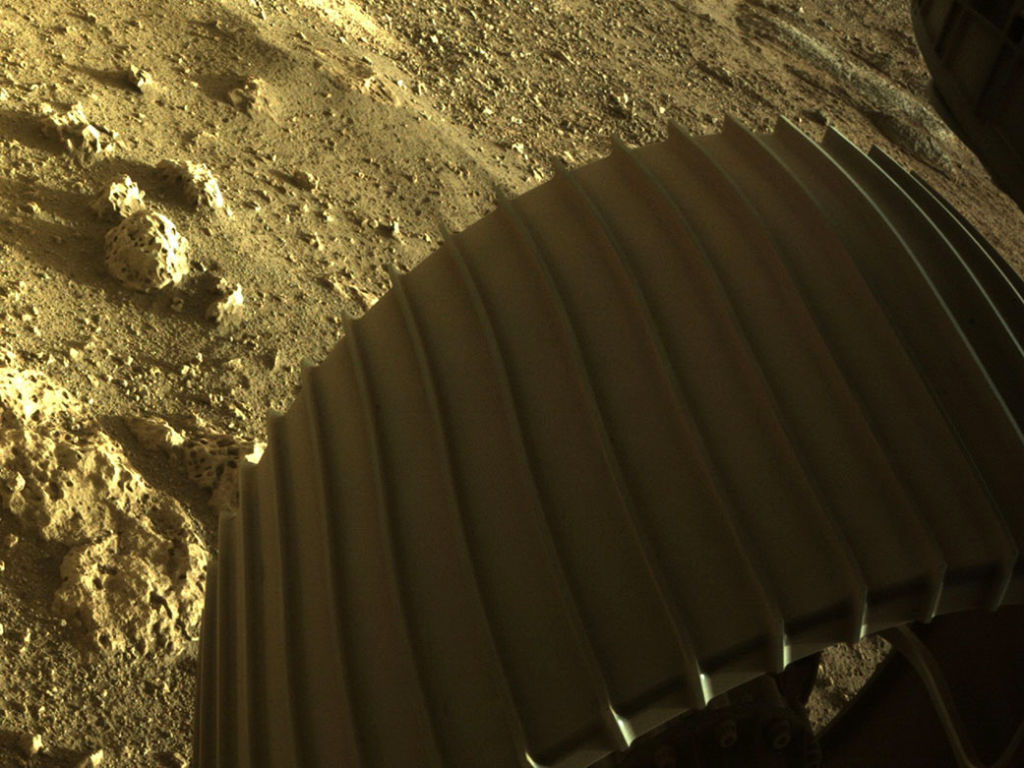
WEST LAFAYETTE, Ind. — High-tech detective work on the surface of Mars has led to a historic breakthrough, and a Purdue University scientist is leading the team that found it.
Dr. Roger Wiens, a professor of planetary science in Purdue’s Department of Earth, Atmospheric, and Planetary Sciences, announced that NASA’s Perseverance rover has discovered organic materials embedded within an ancient Martian riverbed. While organic molecules have been detected on Mars in small quantities before, this marks the first time they have ever been uncovered in an ancient aqueous channel—a prime location for seeking signs of past microscopic life.
The discovery was made in a region of the Jezero Crater nicknamed the “Bright Angel Trail,” drawing inspiration from the famous hiking path in the Grand Canyon. “What we found were organic molecules,” Wiens explained. “That means that we found carbon that is bonded with hydrogen and oxygen.”
To unearth these microscopic clues, scientists relied on an instrument appropriately named SHERLOC (Scanning Habitable Environments with Raman & Luminescence for Organics & Chemicals), which sits at the end of the rover’s robotic arm.
“It was named after the detective Sherlock Holmes… because he spent his career sleuthing out clues,” Wiens said. “And that’s what we do with this instrument. We’re trying to sleuth out clues about the organic material on Mars.”
SHERLOC utilizes a Raman spectrometer and a small laser to illuminate and excite molecules on Martian rocks. By analyzing the wavelength of the light that bounces back, researchers can effectively determine the shape and size of the molecules present.
On Earth, organic matter is almost synonymous with life, accounting for 99.99% of all such carbon bonds. However, space chemistry is rarely that simple. Organic compounds are frequently found in drifting space rocks and meteorites without any biological origin. Because Mars is notoriously dry and largely devoid of organic material, the discovery leaves scientists with a profound cosmic mystery.
“The question is, what little organic material Mars has, is it from ancient life or is it simply out there from the cosmos?” Wiens noted. What makes this specific site incredibly compelling to the Purdue team is the geological context. The organic molecules were found inside an ancient riverbed in tandem with “reduction spots.” On Earth, these specific dark, circular spots in red rock formations are typically formed by rock-eating bacteria.
“Because of that connection, both the riverbed and the reduction spots, the location of organics here on Mars is extremely exciting,” Wiens said.
The discovery is only the beginning of the investigation. The Perseverance rover has successfully drilled and collected a physical sample from the Bright Angel Trail site. The sample is currently sealed in a specialized tube traveling alongside the rover.
NASA and its partners plan to retrieve the collection during a future Mars Sample Return mission, bringing the rocks directly to terrestrial laboratories where scientists can definitively prove whether humanity is looking at the chemical footprints of ancient Martian organisms.
About Purdue University
Purdue University is a research institution ranked among the top 10 public universities in the United States. More than 106,000 students study at Purdue across multiple campuses, including more than 57,000 at our main campus locations in West Lafayette and Indianapolis. As a land-grant university committed to affordability and accessibility, Purdue’s main campus has frozen tuition 14 years in a row, enabling more students than ever to graduate debt-free.
Life on Mars? Purdue Professor Discovers Organic Matter was originally published on wibc.com